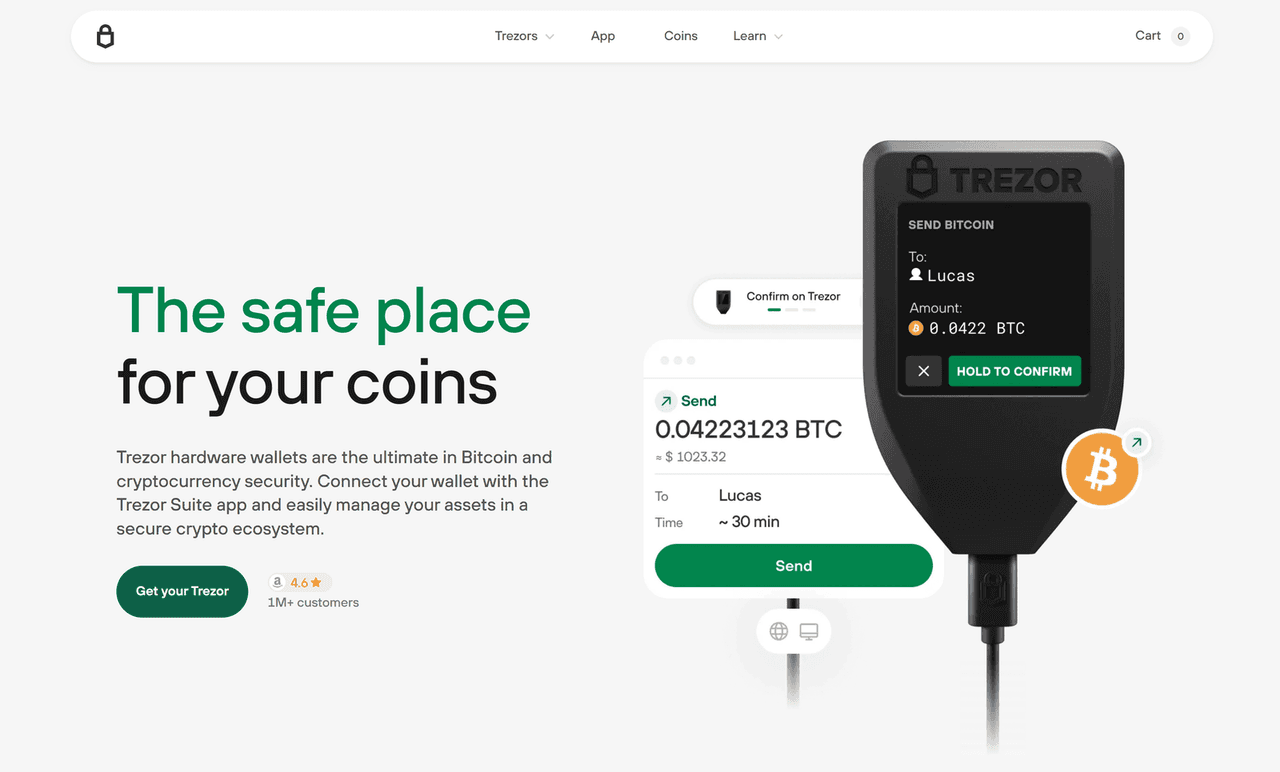
Trezor Hardware Wallet – Secure Your Cryptocurrency
The Trezor hardware wallet is designed to keep digital assets safe by storing private keys offline. Unlike mobile or web wallets that remain connected to the internet, a hardware wallet isolates sensitive information from online threats. This greatly reduces the risk of hacking, malware, and phishing attacks, making Trezor a trusted choice for protecting cryptocurrency.
What Is a Trezor Hardware Wallet?
A Trezor hardware wallet is a physical device used to manage and secure crypto assets. It allows you to send, receive, and store cryptocurrency without exposing private keys to online platforms. Transactions are verified directly on the device, ensuring you remain in control at all times.
Supported assets include major coins such as:
Bitcoin
Ethereum
Litecoin
ERC-20 tokens
Many other popular cryptocurrencies
Key Security Features
Trezor focuses on practical, layered security rather than complicated steps. Important features include:
Offline private key storage
Keys never leave the device.PIN protection
Prevents unauthorized device access.Passphrase support
Adds an extra layer beyond the recovery seed.Recovery seed backup
Allows full wallet restoration if the device is lost or damaged.
These features together ensure control stays with the user, not with exchanges or third parties.
Why Choose a Hardware Wallet?
Digital assets stored on exchanges are exposed to exchange breaches and account compromises. A hardware wallet significantly reduces these risks by:
Keeping keys offline
Requiring physical confirmation for transactions
Preventing remote tampering
For long-term holders, hardware wallets are considered one of the most reliable storage methods.
Getting Started Basics
Using a Trezor wallet generally involves:
Connecting the device to a computer or mobile phone
Initializing a new wallet and creating a PIN
Writing down the recovery seed on paper and storing it securely
Using compatible software (such as Trezor Suite) to manage assets
The recovery seed is the most important backup—anyone with it can restore the wallet—so it must be kept private and offline.
Two-Factor Style Protection
Although hardware wallets are inherently secure, Trezor also supports additional protective options:
Device PIN entry
Optional passphrase
On-device transaction confirmation
This functions similarly to two-factor verification, since actions require both the physical device and user approval.
Common Problems and Practical Solutions
Forgot PIN
Restore the wallet using the recovery seed and set a new PIN.
Device lost or damaged
Use the recovery seed on a new Trezor device to regain access.
Computer cannot detect device
Try another USB cable/port, update the firmware, or reinstall management software.
Entered wrong PIN multiple times
The device increases the delay between attempts to protect against brute-force access.
Best Practices for Safety
Never share your recovery seed online
Do not photograph or store the seed digitally
Purchase devices only from official trusted sellers
Double-check addresses on the device screen before confirming
Keep firmware up to date
Following these practices ensures long-term asset protection.
Conclusion
The Trezor hardware wallet offers a strong, user-controlled way to secure cryptocurrency. By storing private keys offline, requiring physical confirmation, and providing reliable backup tools, it helps protect digital assets from many online risks. For users who value ownership, privacy, and long-term security, Trezor remains a leading solution for safeguarding cryptocurrency.